Origin story · Ginseng
Ginseng: A Thousand Years Of Korean Cultivation, Now In A Serum
Ginseng (인삼) is the oldest ingredient in Korean skincare and the one most loaded with cultural weight. Here is the honest version: where it comes from, what the topical extract actually does, and when it is worth paying for.
7 min read · Skin Grocer Curation Desk
Where it comes from
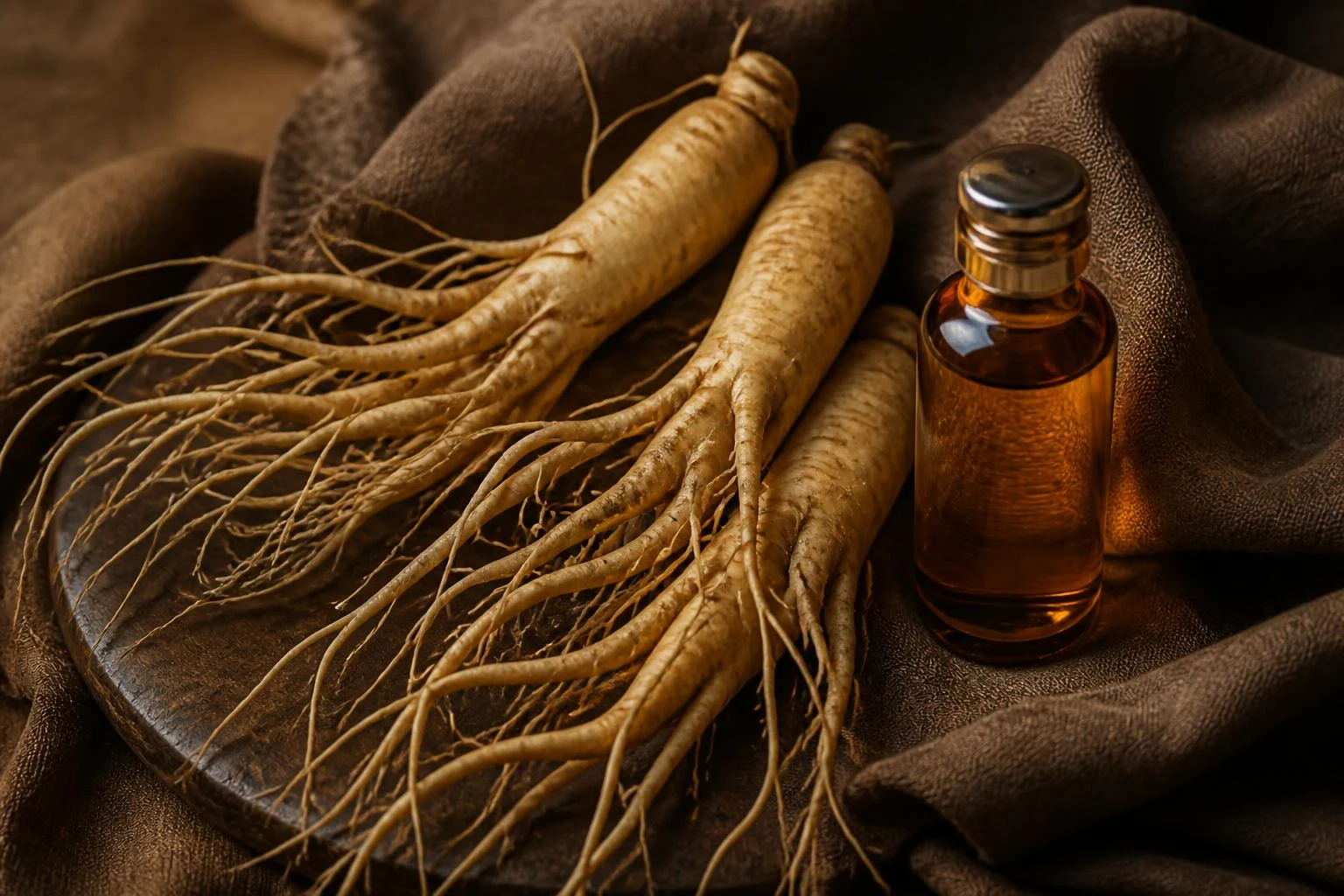
Panax ginseng has been cultivated on the Korean peninsula for well over a thousand years, with Goryeo-era records describing it as a tribute good and Joseon-era medical texts prescribing it for depletion and fatigue. The plant takes four to six years in the ground before harvest, which is why it has always been expensive. 'Red ginseng' (홍삼) is the same root, steamed and dried — a preservation method that also changes its chemistry, concentrating a group of saponins called ginsenosides.
What it does on skin
Topically, ginseng extract is used as an antioxidant and circulation-supporting ingredient. Ginsenosides are the active fraction of interest, and formulas usually pair them with humectants so the result feels firming and plumped rather than tightening. In practical terms: it is a comfort-and-radiance ingredient for dull, tired, dehydrated or mature skin. It is not an exfoliant, not a pigment inhibitor, and not a replacement for retinal.
Why Korean brands use it so heavily
Two reasons, and only one is scientific. Ginseng carries enormous domestic trust — it is what a Korean grandmother recommends — so it anchors 'heritage' lines the way rose does in French skincare. It also genuinely performs as a sensorially rich antioxidant base that suits the prevention-first Korean approach: something you use daily for years, not a corrective active you cycle.
How to use it in Australia
Use ginseng products in the evening, after your hydrating layer and before moisturiser, or in the morning under sunscreen if the texture is light enough. Ginseng formulas made for Korean winters can feel heavy in Brisbane or Darwin humidity — choose a serum or ampoule texture rather than a balm-cream if you live somewhere sticky. It layers safely with niacinamide, peptides, hyaluronic acid and PDRN.
Who should skip it
Anyone with a known reaction to Araliaceae plants, and anyone whose priority right now is active acne — ginseng formulas are often rich, and richness is the wrong lever for congestion. If your main concern is barrier damage or stinging, start with centella or ceramides and add ginseng once the skin is calm.
What we read
- Olive Young 2026 top ingredient benefit groups (Korean consumer purchase behaviour)
- Hwahae (화해) — Korea's largest beauty review platform, 2026 trend report
- Korean MFDS — functional cosmetics ingredient framework (기능성화장품)
Educational only — not medical advice. Persistent or severe skin concerns deserve a dermatologist.
Shop this article
In-stock in our Melbourne warehouse — order by 12pm and it’s on your doorstep tomorrow across metro Australia.
Keep reading
Seoul Signal · Philosophy
미리 관리: Korea's Prevention-First Skincare Philosophy
The idea that reframes everything — fix it before it becomes a problem.
7 min read
Ingredient · Active
PDRN: What Salmon DNA Actually Does For Your Skin
The clinic ingredient that moved onto retail shelves — and where to start with it.
6 min read
Ingredient · Barrier
Centella Asiatica: Why It's In Almost Everything We Stock
Cica isn't a trend in Korea — it's the default baseline for daily skin insurance.
5 min read