Origin story · Rice ferment
Rice Water And Ferment Filtrates: The Oldest Korean Beauty Habit
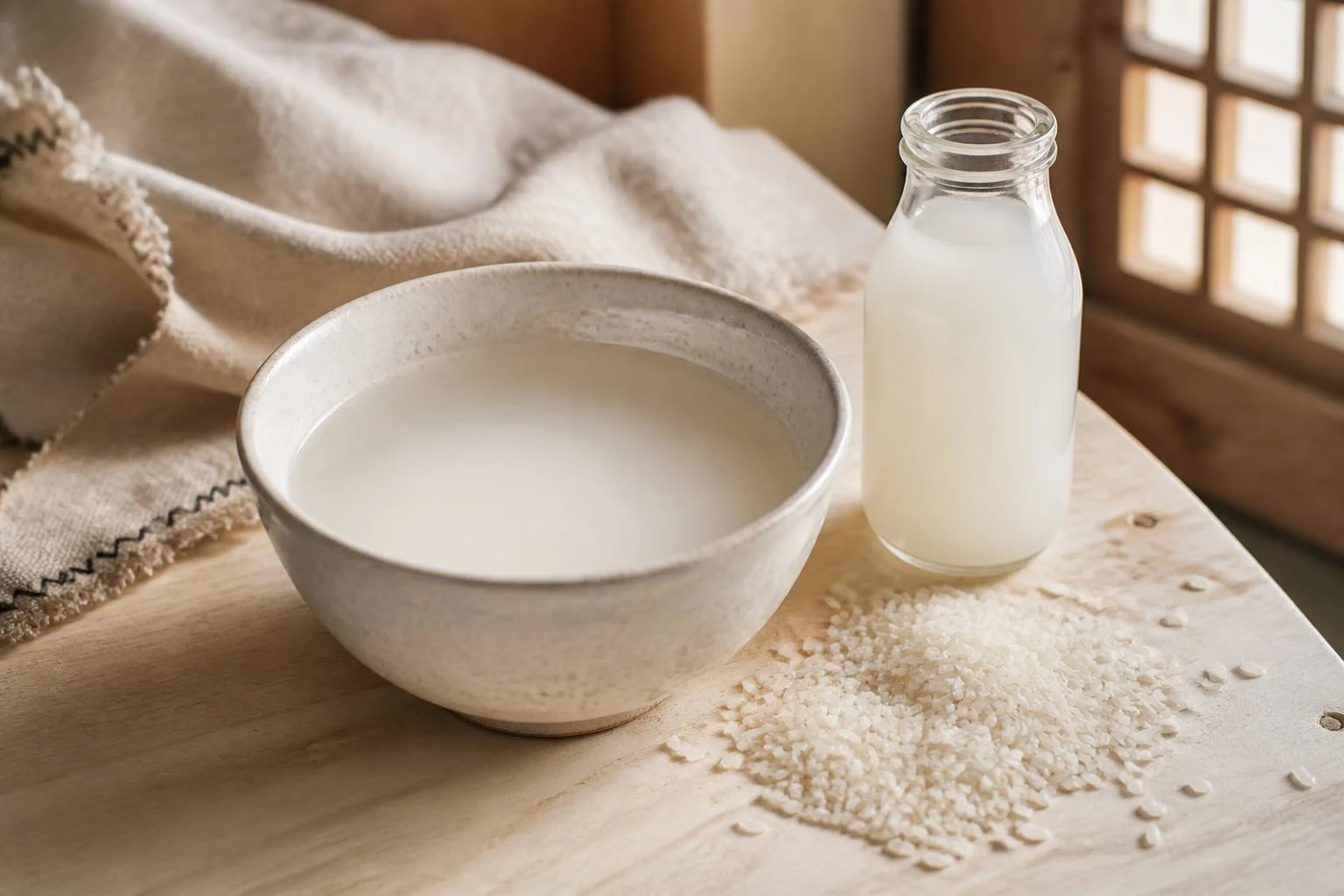
Rinsing your face with the cloudy water left from washing rice — ssal-tteumul (쌀뜨물) — predates the Korean cosmetics industry by centuries. Fermentation turned that habit into a category. Here is what the modern version actually adds.
7 min read · Skin Grocer Curation Desk
Where it comes from
Rice water was a household skincare and haircare step across Korea, Japan and China long before commercial cosmetics existed: the starchy rinse water was reused rather than discarded. Korean brands industrialised it by fermenting rice with yeasts and bacteria, a process borrowed conceptually from makgeolli and other traditional ferments, and by the 1980s Japanese and Korean brands were selling filtrate-based essences built on the observation that sake brewers had notably soft hands.
What fermentation actually does
Fermentation breaks large molecules into smaller ones and generates by-products: amino acids, organic acids, vitamins, peptides and beta-glucan. The practical effects are better sensorial absorption, mild surface exfoliation from the organic acids, and added humectancy. Common INCI names to look for are Saccharomyces ferment filtrate, Galactomyces ferment filtrate, Lactobacillus ferment and Oryza sativa (rice) extract.
What it does not do
Fermentation is not an active category by itself. A ferment filtrate is not a retinoid, not a pigment inhibitor, and not proven to remodel collagen. Claims that fermented essences 'renew skin at a cellular level' outrun the evidence. Treat rice ferment as an excellent daily conditioning and hydration step — the thing that makes everything after it work better and feel better.
How to use it in Australia
Use a ferment essence as the step directly after cleansing, on damp skin, morning and night. It suits dull, dehydrated or texture-prone skin and is safe for most people daily. In hard-water areas — much of Adelaide and Perth — a hydrating ferment essence noticeably reduces the tight, squeaky feeling left after washing.
Who should be careful
Galactomyces in particular is not universally tolerated: some people with fungal acne (malassezia folliculitis) or yeast-sensitive skin react to it. If you get small uniform bumps on the forehead or chest after starting a ferment essence, stop and switch to a plain humectant toner.
What we read
- Hwahae (화해) — Korea's largest beauty review platform, 2026 trend report
- Olive Young 2026 top ingredient benefit groups (Korean consumer purchase behaviour)
Educational only — not medical advice. Persistent or severe skin concerns deserve a dermatologist.
Shop this article
In-stock in our Melbourne warehouse — order by 12pm and it’s on your doorstep tomorrow across metro Australia.
Keep reading
Seoul Signal · Philosophy
미리 관리: Korea's Prevention-First Skincare Philosophy
The idea that reframes everything — fix it before it becomes a problem.
7 min read
Routine · Order
The Correct Layering Order For Humid Australian Summers
When Korean seven-step logic breaks down at 35°C, and what to do instead.
5 min read
Origin story · Ginseng
Ginseng: A Thousand Years Of Korean Cultivation, Now In A Serum
Where Korean red ginseng came from, what it does topically, and who it suits.
7 min read